2026 Illinois Office Flooring Trends Shaping the Return-to-Office Era
2026 Illinois office flooring is becoming a strategic lever for employers navigating hybrid work, rising operating costs, and shifting employee expectations. The debate between remote flexibility and in-office collaboration continues, and many organizations now recognize that mandates alone do not bring people back. When offices feel noisy, cold, or physically draining, employees evaluate comfort, wellness, and daily experience more carefully than ever. As a result, morale and productivity decline quickly.
The built environment plays a measurable role in workforce engagement. Flooring, in particular, affects acoustics, comfort, air quality, safety, and long-term maintenance costs. In Chicagoland offices, flooring must also withstand winter moisture, salt tracking, temperature swings, and sustained foot traffic without deteriorating early. These pressures make flooring decisions in 2026 both a financial and cultural investment.
Modern office flooring strategies prioritize intentional design over uniform surfaces. Employees expect environments that support focus and well-being while reflecting the comfort of home. Employers, meanwhile, need commercial flooring systems that manage lifecycle costs amid inflation and material volatility.
As Illinois businesses plan the next phase of office use, flooring choices are shifting away from one-size-fits-all solutions. Organizations now adopt layered, zone-based approaches that balance wellness, flexibility, and durability. Understanding these trends helps leaders align workplace design with productivity goals while protecting long-term operational budgets.
Comfort-Focused Flooring That Competes With Home
Comfort has become a defining factor in 2026 office flooring decisions. Employees now compare the office directly to their home workspace, where softer surfaces, warmer finishes, and quieter environments are common. Traditional hard floors often fail to meet that baseline expectation.
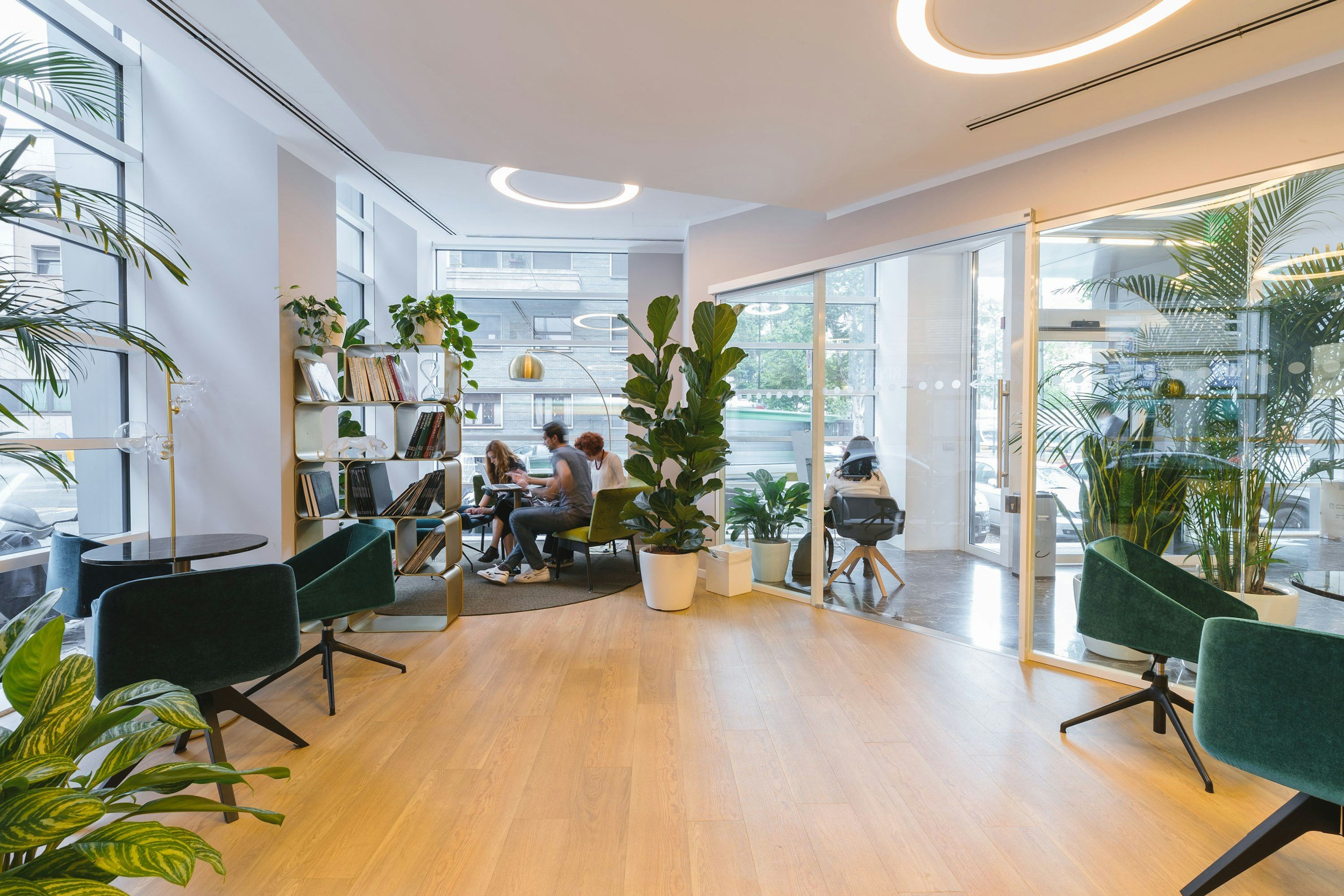
Luxury vinyl tile and modern commercial carpet systems now address this gap. Wood-look LVT in warm oak, walnut, and natural maple tones creates visual warmth without the upkeep of hardwood. These materials perform well in Illinois offices because they resist moisture, clean easily, and tolerate temperature fluctuations. During winter, they also feel less rigid underfoot than stone or polished concrete.
Carpet tile remains essential for comfort-driven office design. New construction projects prioritize low-pile, solution-dyed fibers that absorb sound, reduce fatigue, and resist stains and wear. When placed in private offices, collaboration zones, or lounge areas, carpet tile helps recreate the acoustic softness employees associate with home.
Many offices now intentionally layer flooring materials. Resilient surfaces support corridors and shared spaces, while carpet tile anchors work zones. This approach balances durability and comfort while extending the flooring’s overall lifespan. In 2026, Illinois offices will no longer treat comfort as a luxury. They recognize it as a baseline expectation tied directly to retention and engagement.
Zone-Based Flooring for Noise Control and Longevity
Zoning has become one of the most effective strategies in Chicagoland office flooring. Instead of installing the same surface everywhere, offices divide space by function and select flooring based on use. This method improves acoustics, manages wear patterns, and supports long-term maintenance planning.
Open offices remain common, but unmanaged noise continues to drive employee dissatisfaction. Carpet tile and acoustic LVT reduce sound transmission and help contain noise within collaboration zones. These materials absorb significantly more ambient sound than hard surfaces, which improves focus without structural changes.
Traffic flow also shapes flooring decisions. Entryways, corridors, breakrooms, and copy areas experience heavy use, especially during Illinois winters when salt and moisture accelerate wear. Slip-resistant hard surfaces perform better in these zones, while softer materials remain protected in lower-traffic areas.
Zoning also supports smarter maintenance schedules. Facilities teams clean flooring based on actual usage rather than blanket routines. High-traffic areas receive frequent interim care, while quieter zones maintain appearance longer. This approach reduces premature replacement, controls labor costs, and supports sustainability goals. In 2026, office flooring decisions prioritize performance over uniformity. Zoning allows Illinois offices to align materials with real-world demands while extending floor life.
Biophilic and Flexible Flooring for Evolving Workplaces
Biophilic design continues to influence 2026 office flooring as organizations focus on stress reduction and employee well-being. Flooring that reflects natural textures such as wood grain, stone variation, and organic movement creates a calming foundation that supports focus without distraction.
Engineered alternatives make biophilic design practical. Cork-inspired LVT, bamboo-look planks, and natural-pattern carpet tiles provide the visual effect of organic materials without requiring high maintenance. In Illinois offices, durability remains critical, which makes these options far more viable than raw natural flooring.
Flexibility now matters as much as aesthetics. Office layouts continue to evolve as teams shift between hybrid, collaborative, and in-office work models. Modular commercial flooring allows organizations to adapt without replacing entire floors. Teams can replace individual tiles, adjust layouts, and reconfigure zones with minimal disruption.
Color variation and pattern changes also support wayfinding. Flooring can define pathways, collaboration areas, and quiet zones without excessive signage. This improves navigation and accessibility while maintaining visual clarity. In 2026, Illinois office flooring must support change rather than resist it. Flexible, biophilic systems allow workplaces to evolve while maintaining comfort and performance.
Office Flooring as a Strategic Investment in 2026
Office flooring decisions in 2026 sit at the intersection of workforce expectations, operational resilience, and cost control. Employers cannot control economic volatility, labor shifts, or evolving work preferences. They can control the physical environment employees experience every day. Flooring directly affects comfort, acoustics, safety, air quality, and maintenance budgets.
A successful 2026 Illinois office flooring strategy prioritizes durability where wear is highest, softness where productivity matters most, and flexibility where change remains constant. Zone-based layouts, comfort-driven materials, and modular systems help offices perform better without overextending budgets. In Chicagoland, where seasonal stressors accelerate wear, proactive flooring planning also protects the long-term value of the investment.
Offices that succeed in 2026 will not rely on mandates alone. They will create environments that feel intentional, supportive, and designed for how people work today. Flooring plays a foundational role in that experience. If you want help creating an office flooring plan that supports productivity, flexibility, and long-term value, contact Scharm Floor Covering to get started.